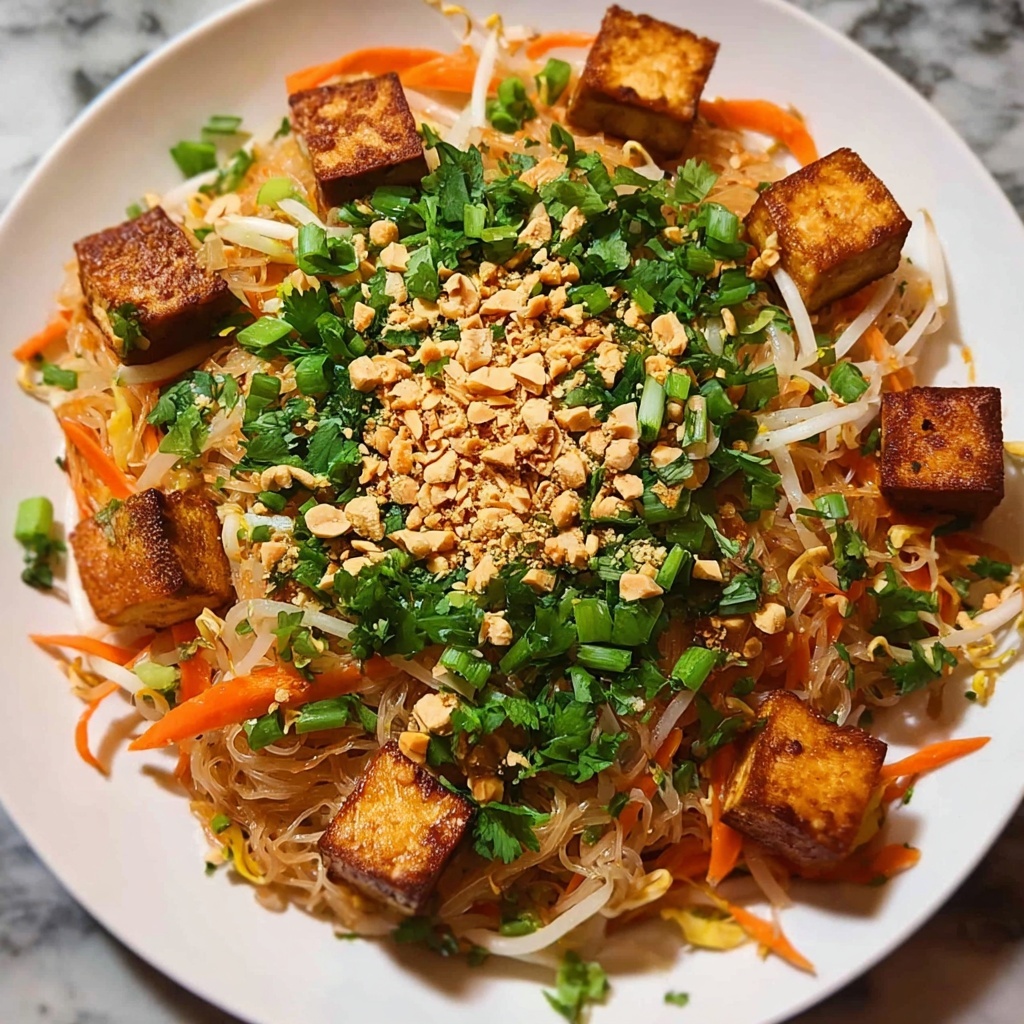
If you have a soft spot for vibrant, flavorful, and satisfying meals, this Plant-based Pad Thai Recipe is about to become your new favorite. This dish balances tangy tamarind, fresh lime, and savory soy sauce with the delightful crunch of bean sprouts and peanuts, all wrapped up in tender rice noodles and crispy tofu. It’s a perfect blend of textures and flavors that makes every bite an adventure. Whether you’re a longtime vegan or just exploring plant-based meals, this recipe delivers the authentic Thai street food experience right at home.
Ingredients You’ll Need
As simple as the ingredients sound, each one plays a crucial role in creating the complex harmony of flavors and textures in this Plant-based Pad Thai Recipe. From the silky noodles to the crunchy peanuts, every component adds depth and character to the dish.
- Rice noodles: These form the soft and chewy base that soaks up all the delicious sauce perfectly.
- Firm tofu: Cubed for a crispy, protein-packed element that’s the heart of this plant-based version.
- Bean sprouts: Add a refreshing crunch and a hint of sweetness to brighten the dish.
- Green onions: Provide a mild, oniony bite and vibrant green color.
- Carrots: Julienned to bring in natural sweetness and a little extra crunch.
- Peanuts: Crushed for their earthy flavor and satisfying texture contrast.
- Lime juice: Injects a zesty, citrus tang that lifts all the flavors.
- Tamarind paste: The key to that signature tangy, slightly sweet, and sour note traditional to Pad Thai.
- Soy sauce: Adds umami depth and saltiness, enhancing every bite.
- Vegetable oil: For stir-frying and achieving that slight caramelization on vegetables and tofu.
- Fresh cilantro: Tossed in at the end, its bright and fragrant leaves finish the dish beautifully.
- Salt: To taste, balancing and enhancing all other flavors.
How to Make Plant-based Pad Thai Recipe
Step 1: Soften the Rice Noodles
Begin by soaking your rice noodles in boiling water for 10 to 15 minutes until they become soft but still hold a bit of firmness. This is essential to prevent mushiness later on, allowing the noodles to hold up beautifully when tossed with the sauce and vegetables.
Step 2: Prepare the Authentic Sauce
Whisk together tamarind paste, soy sauce, and fresh lime juice in a small bowl until smooth. This sauce is the soul of your Plant-based Pad Thai Recipe, embodying the classic sweet, sour, and umami balance that makes this dish irresistible.
Step 3: Sauté Vegetables and Aromatics
Heat vegetable oil in a well-seasoned skillet or wok over medium-high heat. Toss in the julienned carrots and chopped green onions, stir-frying for 2 to 3 minutes. This not only softens them slightly but also unlocks their natural sweetness and fragrance, setting a flavorful foundation.
Step 4: Combine Noodles and Sauce
Add the drained rice noodles into the skillet with your sautéed vegetables, then pour the prepared sauce over everything. Gently toss to coat the noodles evenly, making sure every strand is bursting with that tangy, savory flavor combination.
Step 5: Fold in Crispy Tofu and Crunchy Bean Sprouts
Lastly, carefully fold in the crispy tofu cubes and fresh bean sprouts, cooking for just another 1 to 2 minutes until everything is heated through but the sprouts still retain their crunch. This final step creates an exciting texture contrast and completes the classic Pad Thai profile.
How to Serve Plant-based Pad Thai Recipe
Garnishes
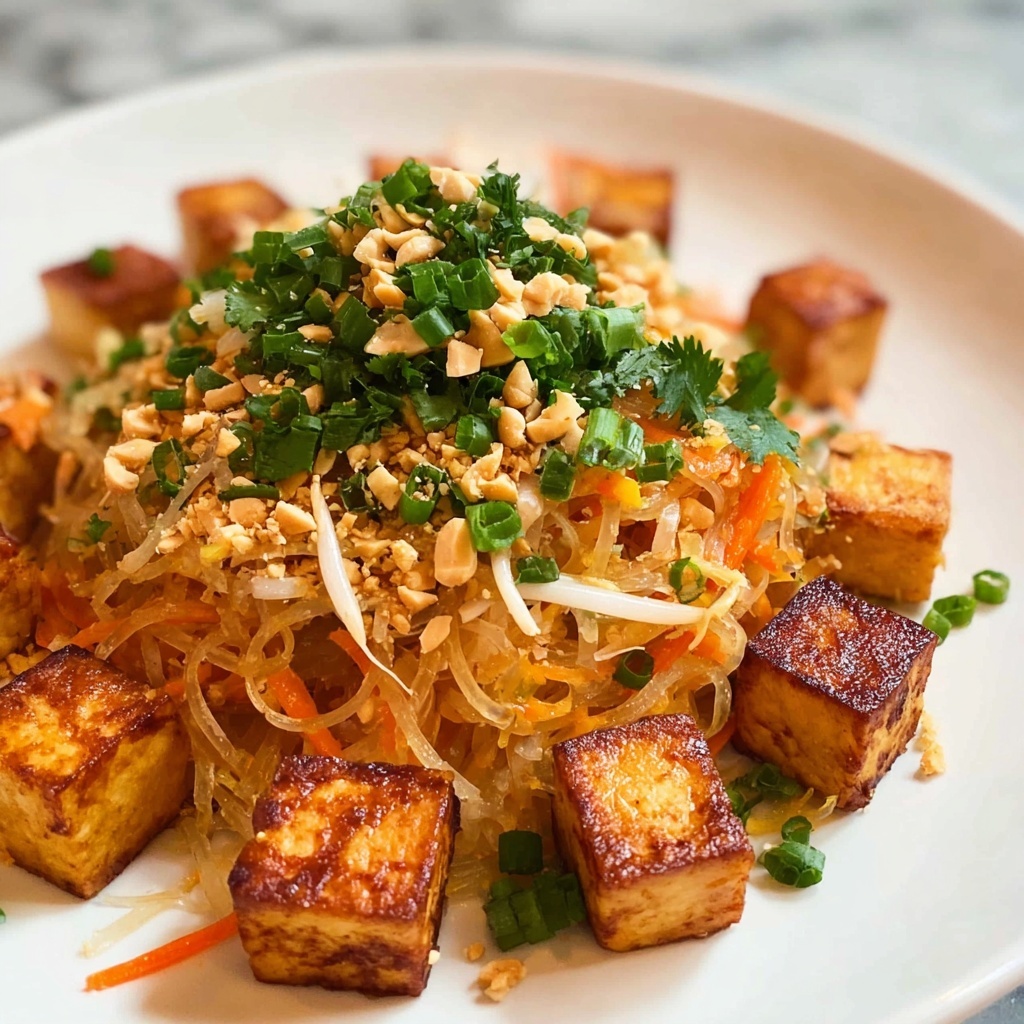
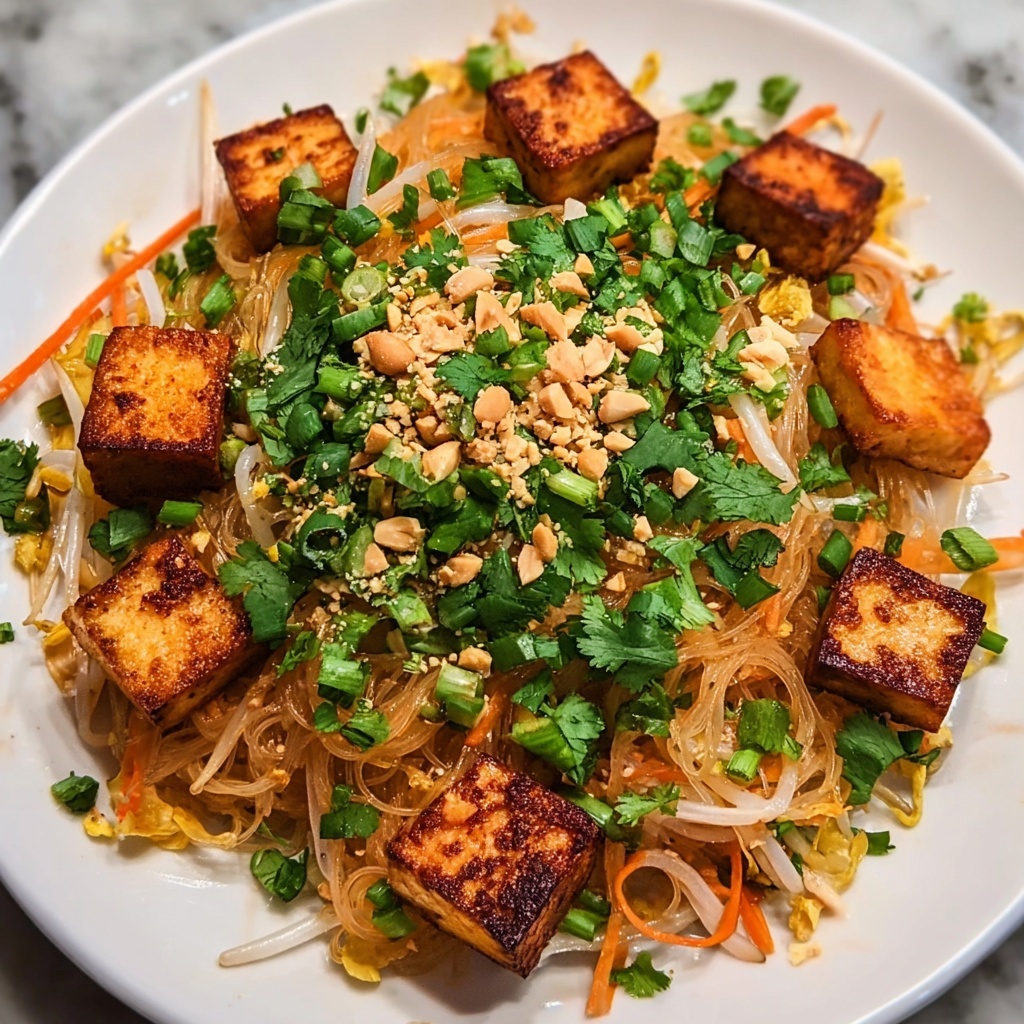
The final presentation of your Plant-based Pad Thai Recipe shines with crushed peanuts for a nutty crunch, a generous handful of chopped fresh cilantro to add a refreshing herby note, and lime wedges on the side to squeeze over for a personal citrus kick. These simple touches make the dish look as vibrant as it tastes.
Side Dishes
Although this Pad Thai is a meal in itself, you can serve it alongside light sides like a crisp cucumber salad or steamed greens for freshness. Pairing with a gentle coconut soup or a simple stir-fried vegetable mix can also provide a balanced and colorful feast.
Creative Ways to Present
For a fun spin on presentation, try serving your Plant-based Pad Thai Recipe in individual banana leaf bowls or let everyone build their own by placing the noodles and toppings separate on the table. Adding edible flowers or extra herbs as garnish can turn this everyday favorite into a stunning centerpiece for any gathering.
Make Ahead and Storage
Storing Leftovers
Once the Plant-based Pad Thai Recipe has cooled, transfer it to an airtight container and store it in the fridge. It will keep well for up to 3 days, making it a perfect meal prep option for busy days when you want flavorful food without fuss.
Freezing
While freezing is possible, be aware that the noodles may become a bit softer upon thawing, and the fresh garnishes should be added only after reheating. Place the cooled Pad Thai in a freezer-safe container and freeze for up to 1 month for best results.
Reheating
To reheat, gently warm your leftover Pad Thai in a skillet over medium heat, adding a splash of water or vegetable broth to prevent sticking and to revive the noodles’ softness. Toss frequently until heated through, then garnish freshly before serving to recapture that fresh texture and brightness.
FAQs
Can I use other types of noodles for this Plant-based Pad Thai Recipe?
Absolutely! While rice noodles are traditional, you can substitute with soba, glass noodles, or even zucchini noodles for a low-carb twist. Keep in mind, cooking times and soaking methods may vary.
How do I make sure the tofu is crispy?
Press the tofu well to remove excess moisture, then pan-fry in hot vegetable oil until golden and crisp on all sides before adding it to the Pad Thai. This will give you that satisfying texture contrast every forkful deserves.
Is tamarind paste essential?
Tamarind paste is key to achieving the authentic tangy flavor of Pad Thai, but if it’s hard to find, you can mix equal parts lime juice and a little brown sugar as a substitute, though the flavor will be slightly different.
Can I add other vegetables?
Definitely! Bell peppers, snap peas, or baby corn can be flavorful additions. Just add them during the sauté stage, adjusting cooking time to keep them crisp-tender.
Is this recipe suitable for gluten-free diets?
To make this recipe gluten-free, be sure to use tamari or a gluten-free soy sauce alternative. The rest of the ingredients are naturally gluten-free, making this dish accessible to many dietary needs.
Final Thoughts
Whipping up this Plant-based Pad Thai Recipe means enjoying a colorful, flavorful meal that’s as nourishing as it is delicious. It’s proof that plant-based cooking can be vibrant, exciting, and genuinely satisfying. Give it a try for your next dinner and watch how this humble dish can become a beloved staple in your kitchen!
Print
Plant-based Pad Thai Recipe
- Prep Time: 10 minutes
- Cook Time: 20 minutes
- Total Time: 30 minutes
- Yield: 4 servings
- Category: Main Course
- Method: Stovetop
- Cuisine: Thai
- Diet: Vegan
Description
A flavorful and vibrant plant-based Pad Thai that combines rice noodles, crispy tofu, fresh vegetables, and a tangy tamarind-lime sauce. Perfect for a quick, healthy, and satisfying vegan meal ready in just 30 minutes.
Ingredients
Main Ingredients
- 200 grams (about 7 oz) rice noodles
- 250 grams (about 9 oz) firm tofu, cubed
- 100 grams (about 3.5 oz) bean sprouts
- 4 green onions, chopped
- 2 medium carrots, julienned
- 50 grams (about 1.75 oz) peanuts, crushed
- A handful fresh cilantro, chopped
- Salt to taste
Sauce
- 2 tablespoons tamarind paste
- 3 tablespoons soy sauce
- 2 tablespoons lime juice
Cooking Fat
- 2 tablespoons vegetable oil
Instructions
- Prepare the Rice Noodles: Boil water and soak the rice noodles in it for 10-15 minutes until they are soft but still slightly firm. Drain the noodles well and set them aside.
- Make the Sauce: In a small bowl, combine tamarind paste, soy sauce, and lime juice. Stir until smooth and set aside.
- Cook the Vegetables: Heat vegetable oil in a skillet over medium-high heat. Add the julienned carrots and chopped green onions, stir-frying for 2 to 3 minutes until they begin to soften.
- Add Noodles and Sauce: Add the drained rice noodles to the skillet with the sautéed vegetables. Pour the prepared sauce over the noodles and vegetables, tossing gently to ensure everything is evenly coated.
- Incorporate Tofu and Bean Sprouts: Gently fold in the crispy cubed tofu and bean sprouts. Cook for an additional 1-2 minutes until the ingredients are heated through.
- Garnish and Serve: Serve the Pad Thai garnished with crushed peanuts and freshly chopped cilantro. Offer lime wedges on the side to add extra zest as desired.
Notes
- To achieve crispy tofu, press the tofu beforehand to remove excess moisture and pan-fry separately before adding to the dish.
- Adjust the tamarind and lime juice quantities to suit your preferred balance of tartness and sweetness.
- This dish is naturally vegan and vegetarian.
- Use gluten-free tamari instead of soy sauce to make the dish gluten-free.
- Fresh lime wedges add brightness and are encouraged as a finishing touch.