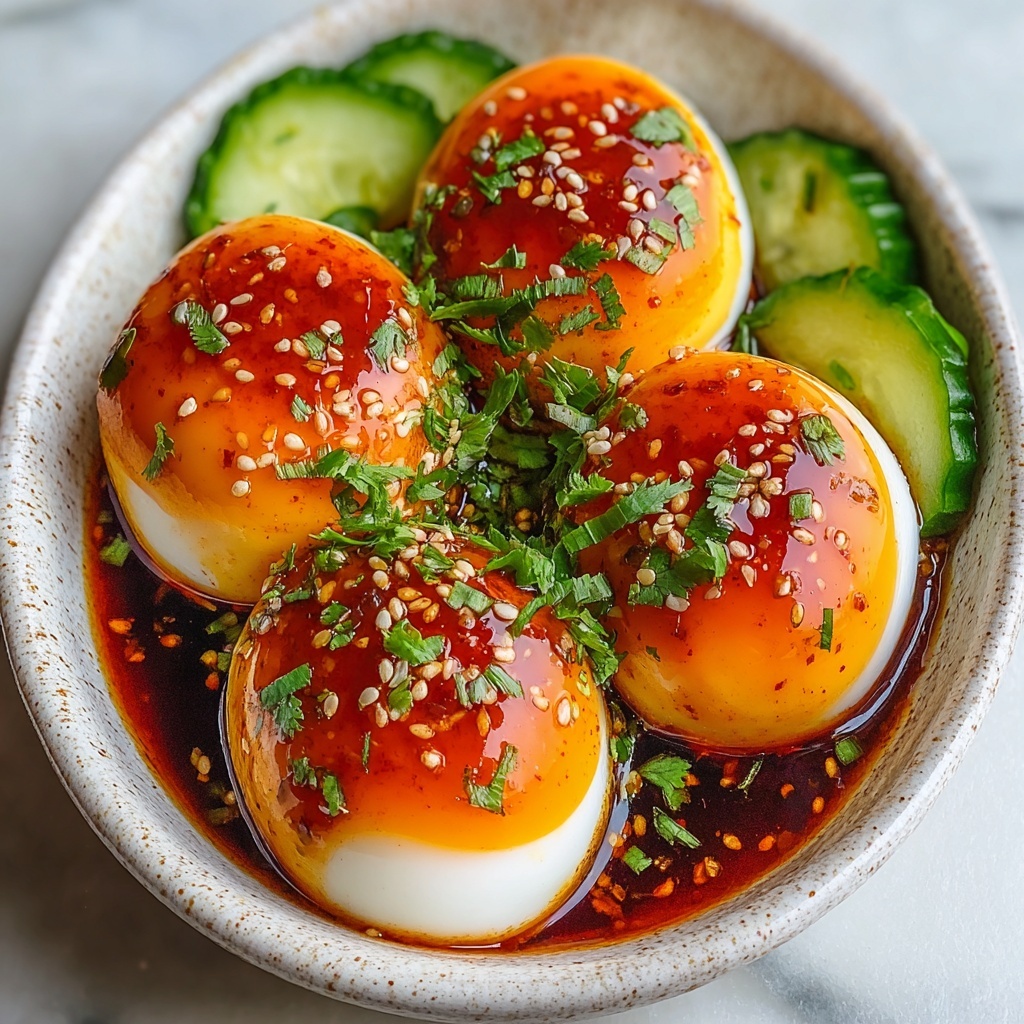
If you’re looking for a vibrant, flavorful breakfast or snack that’s quick and satisfying, this Gochujang Eggs Recipe will surely become your new favorite. Combining the creamy texture of perfectly boiled eggs with the spicy, savory kick of gochujang, this dish is a delightful explosion of taste wrapped in simplicity. Whether you’re a fan of bold Korean flavors or just love experimenting with new twists on eggs, this recipe is a must-try that will brighten up your meal times like no other.
Ingredients You’ll Need
The beauty of this Gochujang Eggs Recipe lies in how simple and accessible the ingredients are. Each one plays a crucial role, whether it’s bringing richness, spice, or a fresh crunch, making the final dish well-rounded and irresistibly tasty.
- Eggs: The star ingredient providing creamy texture and protein; opt for fresh eggs for the best boiling results.
- Gochujang: This fermented Korean chili paste adds spicy, sweet, and savory notes that make the eggs unforgettable.
- Soy Sauce: Adds umami depth and a hint of saltiness that balances the heat of gochujang perfectly.
- Sesame Oil: A small dash delivers a nutty aroma and smooth finish, elevating the flavor profile.
- Green Onions, chopped: Provide a fresh crunch and mild pungency that brightens the dish visually and taste-wise.
How to Make Gochujang Eggs Recipe
Step 1: Boil the Eggs
Start by gently boiling 4 eggs in water. For soft-boiled eggs, aim for around 7 minutes so the yolks stay slightly creamy, or cook longer if you prefer hard-boiled with a fully set yolk. This timing is key to achieving the perfect texture that pairs so magically with the bold sauce.
Step 2: Chill the Eggs
Once boiled, immediately transfer the eggs into a cold water bath filled with ice. This stops the cooking process and makes peeling so much easier, preserving that tender texture inside while cooling the eggs quickly.
Step 3: Peel the Eggs
Carefully peel each egg, trying to keep the white intact without any nicks or tears. Soft-boiled eggs can be delicate, so take your time to keep them whole and smooth, which makes for a nicer presentation and eating experience.
Step 4: Prepare the Gochujang Mixture
In a bowl, combine 2 tablespoons of gochujang, 1 tablespoon of soy sauce, and 1 teaspoon of sesame oil. Mix these ingredients thoroughly until you get a rich, spicy sauce that’s well balanced with savory and nutty tones.
Step 5: Coat the Eggs
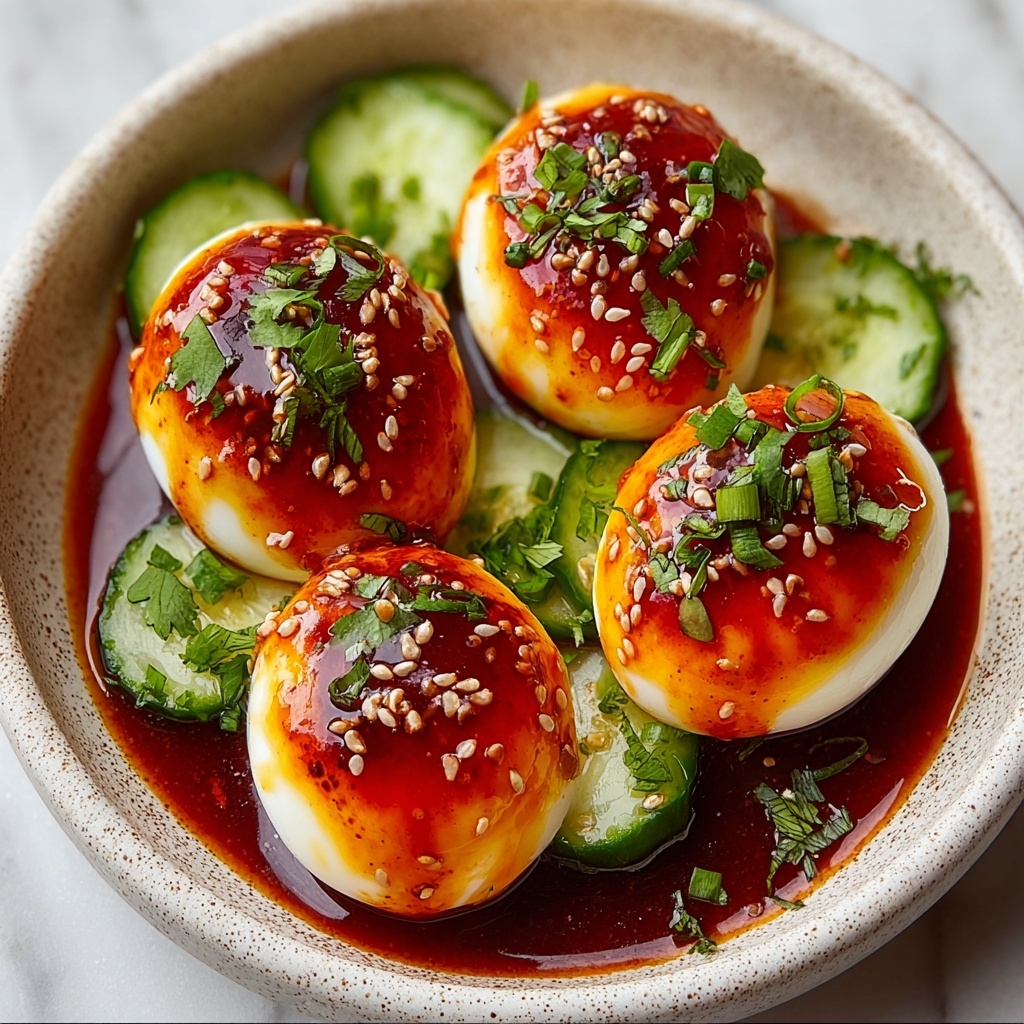
Gently toss the peeled eggs in the gochujang sauce mixture, ensuring every surface is beautifully coated. The sauce should cling to the eggs perfectly, infusing them with that signature flavor punch that defines this Gochujang Eggs Recipe.
Step 6: Garnish and Serve
Finally, sprinkle chopped green onions over the coated eggs. These little pops of green add not only freshness but a stunning contrast of color that makes the entire dish pop and look irresistible.
How to Serve Gochujang Eggs Recipe
Garnishes
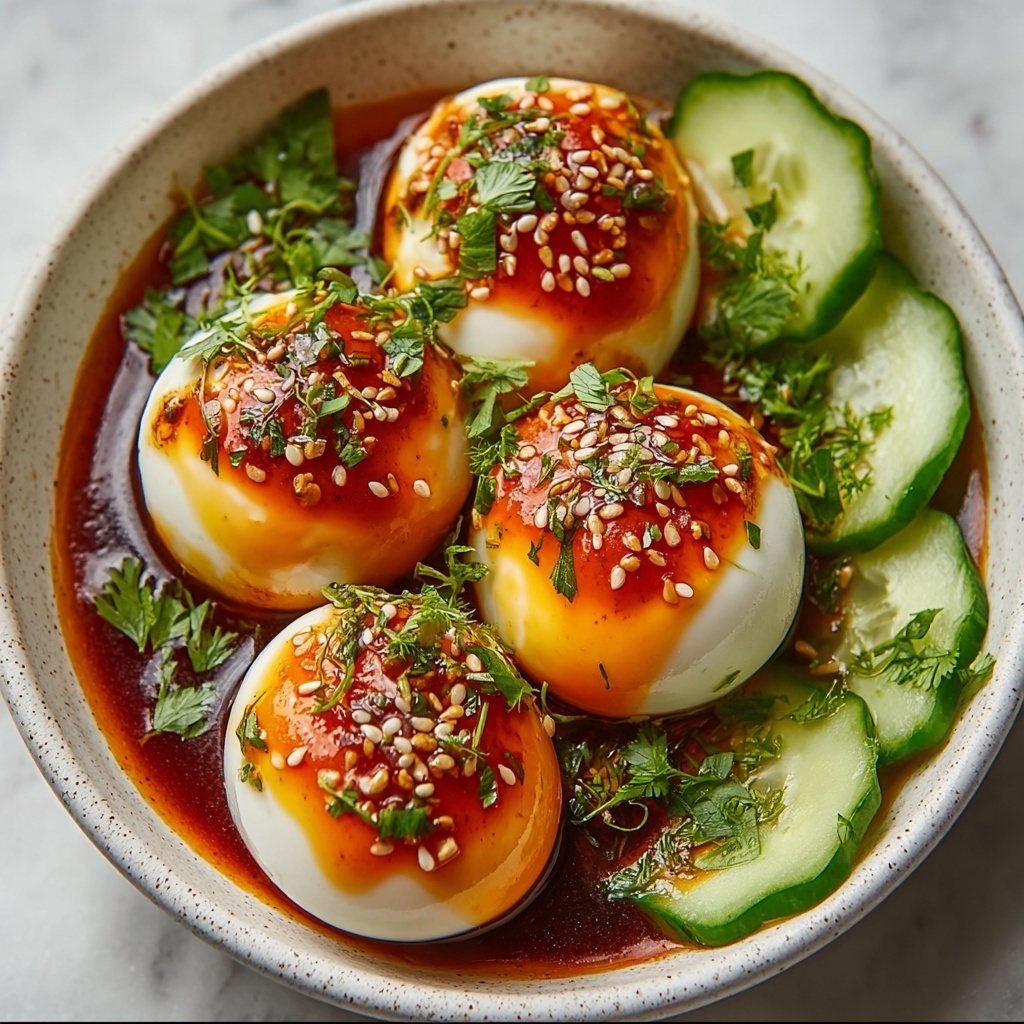
Beyond green onions, you can add toasted sesame seeds for crunch or a small drizzle of extra sesame oil for gloss and flavor depth. A few thin slices of radish or pickled vegetables will also brighten the dish with acidity and texture.
Side Dishes
This dish pairs wonderfully with steamed rice to soak up any extra sauce, or alongside a crisp cucumber salad for a refreshing balance. Think kimchi or lightly sautéed greens that complement the spicy richness of the eggs without overpowering them.
Creative Ways to Present
For a snack, serve the eggs halved on small plates with the sauce pooled around them. Or turn it into a more substantial meal by placing the sauced eggs atop a bowl of noodles or mixed grain bowls. The vibrant red hues of the gochujang sauce make the presentation strikingly beautiful every time.
Make Ahead and Storage
Storing Leftovers
Gochujang Eggs are best enjoyed fresh, but you can store leftover coated eggs in an airtight container in the refrigerator for up to 2 days. Keep them chilled and consume soon to maintain texture and flavor.
Freezing
Because of the delicate texture of boiled eggs and the sauce, freezing is not recommended. It can affect the eggs’ texture and the sauce consistency, potentially turning it watery or grainy upon thawing.
Reheating
If you want to enjoy the eggs warm, gently reheat them in a steamer or microwave on low power for short intervals, just enough to warm without cooking the egg further. Avoid overheating, as it will toughen the egg white and change the flavor profile of the sauce.
FAQs
Can I make this recipe vegan or vegetarian?
Since the recipe relies heavily on eggs, it’s not vegan, but vegetarian eaters can enjoy it fully. For a vegan twist, you might substitute with tofu and experiment with the gochujang sauce as a marinade, though the texture and taste will be quite different.
What if I don’t have gochujang?
Gochujang is key to this recipe’s unique flavor, but in a pinch, you can mix a bit of chili paste with a touch of miso and sugar to mimic the sweet, spicy, and savory profile. Still, nothing beats the authentic gochujang experience!
Can I use hard-boiled eggs instead of soft-boiled?
Absolutely! Hard-boiled eggs work just as well and make peeling easier. The firmer yolk provides a different, yet delightful texture contrast with the spicy sauce coating.
Is the Gochujang Eggs Recipe spicy?
The dish has a nice moderate heat from the gochujang, but it’s balanced by soy sauce and sesame oil. If you’re sensitive to spice, you can reduce the gochujang slightly or add a bit more soy sauce to mellow it out.
How can I enhance the flavor even more?
Try adding a sprinkle of toasted sesame seeds, a dash of rice vinegar for acidity, or even a light drizzle of honey if you want a sweet-spicy contrast. Fresh herbs like cilantro can also add an exciting twist.
Final Thoughts
This Gochujang Eggs Recipe is a fantastic way to bring excitement to your everyday meals with minimal effort. The combination of spicy, savory, and nutty flavors wrapped around tender boiled eggs is truly unforgettable. I wholeheartedly encourage you to give it a go—it’s comfort and adventure all on one plate, perfect for those moments when you want simple cooking with outstanding results.
Print
Gochujang Eggs Recipe
- Prep Time: 5 minutes
- Cook Time: 7 minutes
- Total Time: 17 minutes
- Yield: 2 servings (4 eggs)
- Category: Snack
- Method: Boiling
- Cuisine: Korean
Description
Gochujang Eggs are a flavorful Korean-inspired snack featuring soft or hard-boiled eggs coated in a spicy, savory gochujang sauce. This quick and easy recipe combines the bold heat of fermented chili paste with soy sauce and sesame oil, finished with a fresh garnish of green onions for a perfect umami-packed bite.
Ingredients
Eggs
- 4 eggs
Sauce
- 2 tablespoons gochujang (Korean chili paste)
- 1 tablespoon soy sauce
- 1 teaspoon sesame oil
Garnish
- 1 tablespoon green onions, chopped
Instructions
- Boil the Eggs: Place the eggs in a pot of boiling water and cook for about 7 minutes for soft-boiled eggs or extend the time for harder yolks if preferred.
- Ice Bath: Immediately transfer the eggs to a bowl filled with cold water and ice to stop the cooking process and make peeling easier.
- Peel the Eggs: Once cooled, gently peel the eggs, being careful not to break the whites, and set them aside.
- Prepare the Sauce: In a mixing bowl, combine the gochujang, soy sauce, and sesame oil until well blended to create a spicy, savory coating.
- Coat the Eggs: Toss the peeled eggs in the sauce mixture, ensuring each egg is evenly covered with the flavorful gochujang blend.
- Garnish and Serve: Sprinkle the chopped green onions over the coated eggs for a fresh, aromatic finish, then serve immediately.
Notes
- Adjust the boiling time depending on your preferred yolk consistency.
- For less spice, reduce the amount of gochujang or add a small amount of honey to the sauce.
- These eggs make a great snack or a flavorful addition to rice bowls and salads.
- Store any leftovers in an airtight container in the refrigerator and consume within 2 days.